No products in the cart.
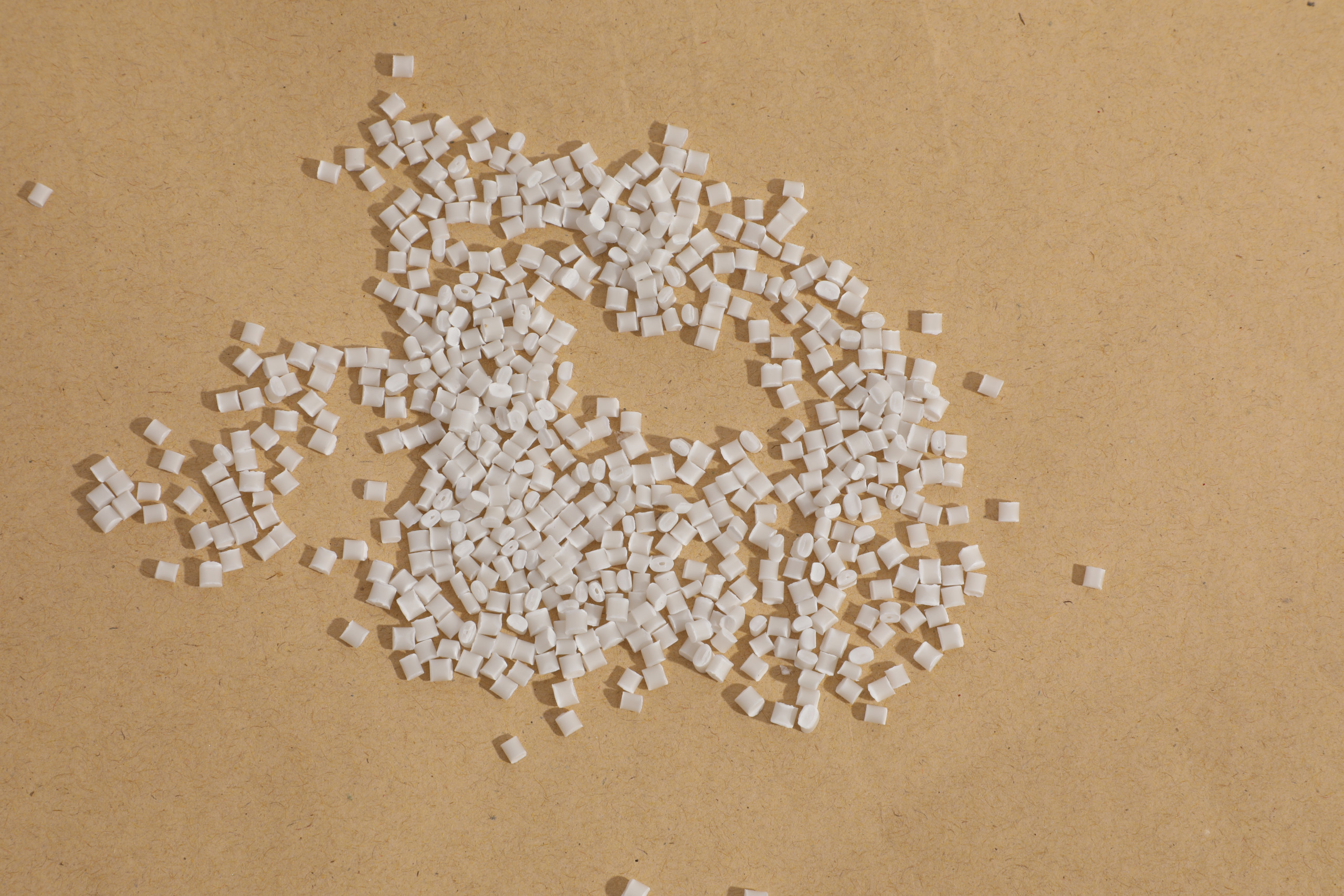

In this in-depth analysis, we’ll start with the molecular structure of PP, dissect the technical standards behind the code, explore its crucial role in industrial applications, and use real-world case studies to reveal why this code deserves your serious attention. Whether you’re a purchasing expert looking for high-performance engineering plastics or an engineer optimizing product design, this article will provide valuable industry insights. When discussing material selection, we’ll also mention how specialized suppliers like CISKO New Material help customers bridge the technical gaps behind the code.
The numerical code consisting of three circular arrows is officially called the “Resin Identification Code” (RIC), created by the American Plastics Industry Association (SPI) in 1988. Its original purpose was to standardize the classification of plastics and facilitate recycling. Codes 1 to 6 correspond to a mainstream plastic resin—PET (1), HDPE (2), PVC (3), LDPE (4), PP (5), and PS (6), while code 7 represents “other” or mixed materials.
PP is designated with code 5 because it holds a unique position within the thermoplastic family: a semi-crystalline thermoplastic polymer made from propylene monomers through an addition polymerization reaction. The regularity of its molecular chains endows it with excellent chemical resistance, fatigue resistance, and a high heat distortion temperature.
From a standards perspective, PP codes correspond to classifications under the ASTM D7611 standard. This standard not only specifies the material type but also clarifies its treatment requirements in the recycling process. However, it’s important to note that the code and material properties are not simply equivalent. Under the same PP code, there may be dozens of different grades, such as homopolymer PP, copolymer PP, random copolymer PP, high-flow PP, and reinforced PP. For example, PP used for injection molding thin-walled food containers and modified PP used for automotive bumpers, although both have the number 5 printed on the bottom, have completely different molecular weights, crystallinity, and additive systems.
The value of plastic codes is reflected in three aspects:
At the recycling end : It’s the core basis for sorting equipment to identify materials. In optical sorting machines, PP’s infrared spectral characteristics are significantly different from other plastics, and the code helps recycling plants quickly classify it.
At the consumer end : It tells users the safe usage conditions of the container. A PP code usually means it can be used for microwave heating (the upper temperature limit needs to be noted) and is suitable for holding food.
At the industrial end : For manufacturers, the code is the most basic basis for material selection. Raw materials labeled PP may come from different polymerization processes and different modification formulations, resulting in huge differences in their final properties.
A common misconception is that code 5 means “absolutely safe” or “100% recyclable.” While PP is generally recognized as a safe material for food contact, this is contingent on the additive system complying with regulations. Recyclability, however, depends on local recycling facilities—many local recycling systems only accept PP products in specific shapes (such as bottles and cups).
Behind PP’s code 5 lies its “passport” to industrial applications:
Chemical Resistance : PP exhibits excellent resistance to acids, alkalis, and organic solvents, making it a top choice for laboratory glassware, chemical storage tanks, and automotive battery casings.
Fatigue Resistance : PP’s molecular chains possess excellent flexibility, allowing it to withstand repeated bending without damage. This is known as the “living hinge” property—the physical basis for the widespread use of Code 5 products (such as bottle caps and flip-tops).
Heat Resistance : PP’s melting point is approximately 160-170℃, and its heat distortion temperature (0.45MPa) is typically between 100-120℃. This means it can withstand boiling water sterilization (100℃), but is not suitable for prolonged exposure to high-temperature oils or ovens. A typical example is when microwaving a PP lunchbox; if the oil temperature exceeds 120℃, the lunchbox may deform.
Electrical Insulation : PP has high volume resistivity and dielectric strength, making it widely used in 5G communication equipment and capacitor films.
The same code 5 will exhibit drastically different performance depending on the modification path:
| Modification direction | Typical applications | Key performance changes |
|---|---|---|
| Glass fiber reinforced PP | Car fans, washing machine parts | The tensile strength was increased from 30 MPa to over 80 MPa, and the heat distortion temperature was increased to 150℃. |
| Flame-retardant PP | Electronic and electrical appliance casings | It achieves the UL94 V-0 rating, but its toughness has decreased. |
| Antistatic/Conductive PP | Explosion-proof containers, electronic packaging | The surface resistivity decreased from 10^16 Ω to 10^6-10^9 Ω |
| Food-grade PP (transparent) | Beverage bottles, baby bottles | Transparency reaches over 90%, meeting FDA/EU food contact standards. |
| Weather-resistant PP | Outdoor furniture, automotive exterior | Passing a 2000-hour xenon lamp aging test, the color retention rate is >80%. |
Industry Observation : In high-end applications such as aerospace, medical implants, and semiconductor manufacturing, pure PP can no longer meet the requirements. Engineers are turning to higher-performance polymers, such as PEI (polyetherimide) and PEEK (polyetheretherketone). CISKO New Material, a supplier specializing in high-performance engineering plastics, offers a product line including PEI, PES, and PPSU. These materials far surpass PP in temperature resistance (PEI has a continuous operating temperature of 170°C) and flame retardancy (PEI can achieve UL94 V-0@0.25mm), filling the high-end demand gap that PP cannot cover.
Case Study : A medical device company needed to select materials for its sterilization trays. The first option was PP (polypropylene), which was low-cost, but after repeated high-temperature, high-pressure steam sterilization (121°C, 20 minutes), the PP trays exhibited severe warping and stress cracking. The second option was PPSU (polyphenylsulfone), with a heat distortion temperature exceeding 200°C and capable of withstanding thousands of steam sterilization cycles, but its cost was more than 10 times that of PP. Ultimately, the company chose modified PP (containing glass fiber reinforcement and heat-resistant additives) for better cost-effectiveness, but required the supplier to provide detailed batch COAs (Certificate of Assurance) and thermal cycling test data.
This case reveals a crucial point: simply looking at plastic codes is far from sufficient. Code 5 is merely a starting point; the final material properties depend on:
Polymerization process (gas phase vs. liquid phase)
, molecular weight distribution (narrow distribution aids processing, wide distribution aids toughness),
comonomer content (ethylene copolymers lower melting point but increase impact resistance),
additive system (antioxidants, light stabilizers, talc fillers, etc.).
Procurement Recommendations : When a supplier simply states “We provide PP material,” you must ask further questions: Is it homopolymer or copolymer? What is the melt flow index (MFI)? Does it have UL Yellow Card certification? Has it passed FDA/REACH testing? If high-temperature or high-frequency applications are involved, you should even seek solutions directly from a professional supply chain provider. For example, CISKO New Material, as an authorized distributor, provides complete Technical Data Sheets (TDS), Safety Data Sheets (SDS), and batch performance reports along with its PP products, which is crucial for avoiding selection errors.
Although PP is clearly categorized under code 5 in recycling labels, globally, the actual recycling rate for PP is lower than that for PET (code 1) and HDPE (code 2). Reasons for this include:
Diverse modified formulations : The addition of color masterbatches, mineral fillers, glass fiber, flame retardants, etc., to different PP products makes them impossible to mix easily during recycling. A PP part containing 30% glass fiber and a pure PP baby bottle will have vastly different performance after recycling and granulation.
Limitations in downstream applications : Recycled PP is usually grayish in color, has a residual odor, and degraded mechanical properties, limiting its use to low-end injection molding (such as flower pots and floor mats) and preventing its return to high-end packaging or automotive parts.
Sorting technology bottlenecks : PP and PE (code 4) have similar densities (0.89-0.91 g/cm³), making them difficult to distinguish using traditional flotation methods. However, near-infrared spectroscopy (NIR) sorting technology has been widely adopted in advanced recycling plants, and industry reports from 2025 show that NIR sorting accuracy has exceeded 95%.
To overcome the bottlenecks in PP recycling, the industry is driving technological innovation:
Compatibilizer Technology : Developing specialized compatibilizers to ensure uniform dispersion of different modified PP (containing glass fiber, containing mineral powder) during recycling, thereby improving the mechanical strength of recycled materials.
Design for Recycling : Multinational consumer goods companies have begun standardizing PP grades in their packaging to reduce the use of colorants and additives. For example, a FMCG brand announced in 2024 that all its PP bottle caps would use undyed PP, facilitating closed-loop recycling.
Chemical Recycling : Using pyrolysis or alcoholysis techniques, the long chains of PP are broken down into propylene monomers, which are then repolymerized. This technology is currently costly, but pilot projects have already achieved commercial validation by 2025.
In this context, the value of Code 5 is redefined: it is not only an identifier for materials, but also a key label for tracking the flow of materials in the circular economy. The entire lifecycle of a PP container—from the polymerization plant to the injection molding workshop, from the supermarket shelf to the recycling sorting station—depends on the information conveyed by this code.
Enterprise side :
When sourcing PP raw materials, prioritize unmodified or low-additive grades to facilitate future recycling.
If the product involves a composite structure of PP with metals or other plastics, the feasibility of disassembly and separation should be assessed during the design phase.
Pay attention to the supplier’s sustainability commitments. For example, a responsible engineering plastics distributor, such as CISKO New Material, not only provides materials compliant with REACH/RoHS standards but also assists customers in establishing material recycling chains or recommends alternatives more suitable for closed-loop recycling.
Consumer side :
Code 5 (PP) is suitable for microwave heating (but the metal insert must be removed) and can also be used to hold hot water and food.
Avoid prolonged exposure of PP containers to sunlight or hot grease, as this may cause additives to leach out.
Be aware of local recycling rules: some cities accept all PP containers (regardless of color), while others only accept clear or white PP bottles. Incorrect disposal will contaminate the entire batch of recyclables.
Despite the global adoption of plastic coding systems, they suffer from a fundamental flaw: overly simplistic information . Code 5 only tells you that the material is polypropylene, but it doesn’t specify whether it’s cast film grade PP used for food packaging, high-impact PP used for automotive ducts, or flame-retardant PP used for electronic components.

When the application scenario places higher demands on materials—for example:
Continuous operating temperature exceeding 150℃
; must withstand high-frequency electromagnetic interference (5G antenna)
; must be UL94 V-0 flame retardant and halogen-free;
must be transparent and resistant to steam sterilization.
—PP code 5 becomes an insurmountable performance ceiling. At this point, you need to enter the field of “engineering plastics” or even “specialty engineering plastics”.
Here is a simplified performance ladder:
| Plastic Code | Material type | Continuous operating temperature | Typical applications | Cost index (PP=1) |
|---|---|---|---|---|
| 5 | PP | 80-120℃ | Daily necessities, packaging, automotive interiors | 1 |
| 7 | PA (Nylon) | 120-150℃ | Gears, engine components | 2-3 |
| 7 | PC (Polycarbonate) | 125-140℃ | Optical lenses, bulletproof glass | 3-4 |
| 7 | PSU (polysulfone) | 160-170℃ | Medical devices, membrane materials | 6-8 |
| 7 | PEI (polyetherimide) | 170℃ | Aviation interior, 5G connector | 8-12 |
| 7 | PEEK (Polyetheretherketone) | 250℃ | Semiconductors, oil drilling | 15-25 |
Note : Code 7 is a “miscellaneous” category, which may include high-performance specialty plastics or non-recyclable composite materials. Therefore, Code 7 does not equate to “high-end”—in fact, most Code 7 products are not recyclable.
For engineers and purchasing managers, the most direct approach to performance bottlenecks that PP code 5 cannot address is to partner with specialized engineering plastics suppliers. CISKO New Material, for example, possesses deep supply chain expertise in the PP field and can also provide high-performance materials such as PEI, PES, PPSU, and PEEK. The key value of this “one-stop” model lies in:
Technical Matching : Instead of simply pushing materials, we recommend the optimal solution based on the end-application’s operating conditions (temperature, stress, chemical environment, electrical requirements).
Certification Support : All materials come with complete TDS, SDS, COA, UL Yellow Card, and FDA/REACH certificates, helping companies successfully pass customer audits.
Risk Sharing : Through a stable distribution network and inventory system, we avoid production interruptions caused by raw material shortages. As an authorized distributor of Hanwha TotalEnergies PP compounds, CISKO provides traceable supply chain assurance.
A typical collaboration scenario : A 3C electronics company needed to select materials for its charger casing. Initially, PP (polypropylene) was chosen (due to its low cost), but it was discovered that the internal temperature of the charger could reach 130℃, and PP could not meet the safety margin. After evaluation, CISKO’s technical team recommended glass fiber reinforced PEI (Ultem 2300). Although the cost increased, the casing thickness was reduced from 3mm to 1.5mm, the weight per unit decreased by 45%, and the mold life was extended by 3 times. Ultimately, the overall cost of the product was reduced by 15%.
PP plastic code 5, originally just a classification label for recycling systems, has today become a “multilingual symbol” connecting materials science, supply chain management, compliance certification, and sustainability strategies. For users, understanding the true meaning of this code means:

In the initial material selection stage : Being able to quickly determine if PP meets basic requirements, avoiding later failures due to insufficient performance.
During the procurement process : Learning to inquire about the specific grade, additives, certifications, and batch consistency behind the codes.
In application development : Knowing how to seek high-performance alternatives such as PEI and PEEK when PP is insufficient.
From a sustainability perspective : Understanding the crucial role of plastic codes in the recycling chain, promoting closed-loop design.
Looking ahead, with the introduction of artificial intelligence and blockchain technology, the plastic code system may evolve into a “digital material passport”—the molecular weight, crystallinity, additive formulation, and carbon footprint of each batch of materials will be encrypted and recorded, allowing consumers to access complete information simply by scanning a code. The simple number 5 will no longer be the end point, but rather the starting point for material transparency.
For those of you reading this article—whether you’re looking for insulation materials that can withstand temperatures up to 250°C for your next-generation products, or you’re looking to improve the recycling compliance of your existing PP products—start with this code and ask your supply chain: “Is the PP you’re giving me really just PP?” The answer might surprise you and guide you to a better path. When conventional PP can’t meet your needs, a professional partner like CISKO New Material might be the key to unlocking the material’s potential.


Leave a comment