No products in the cart.
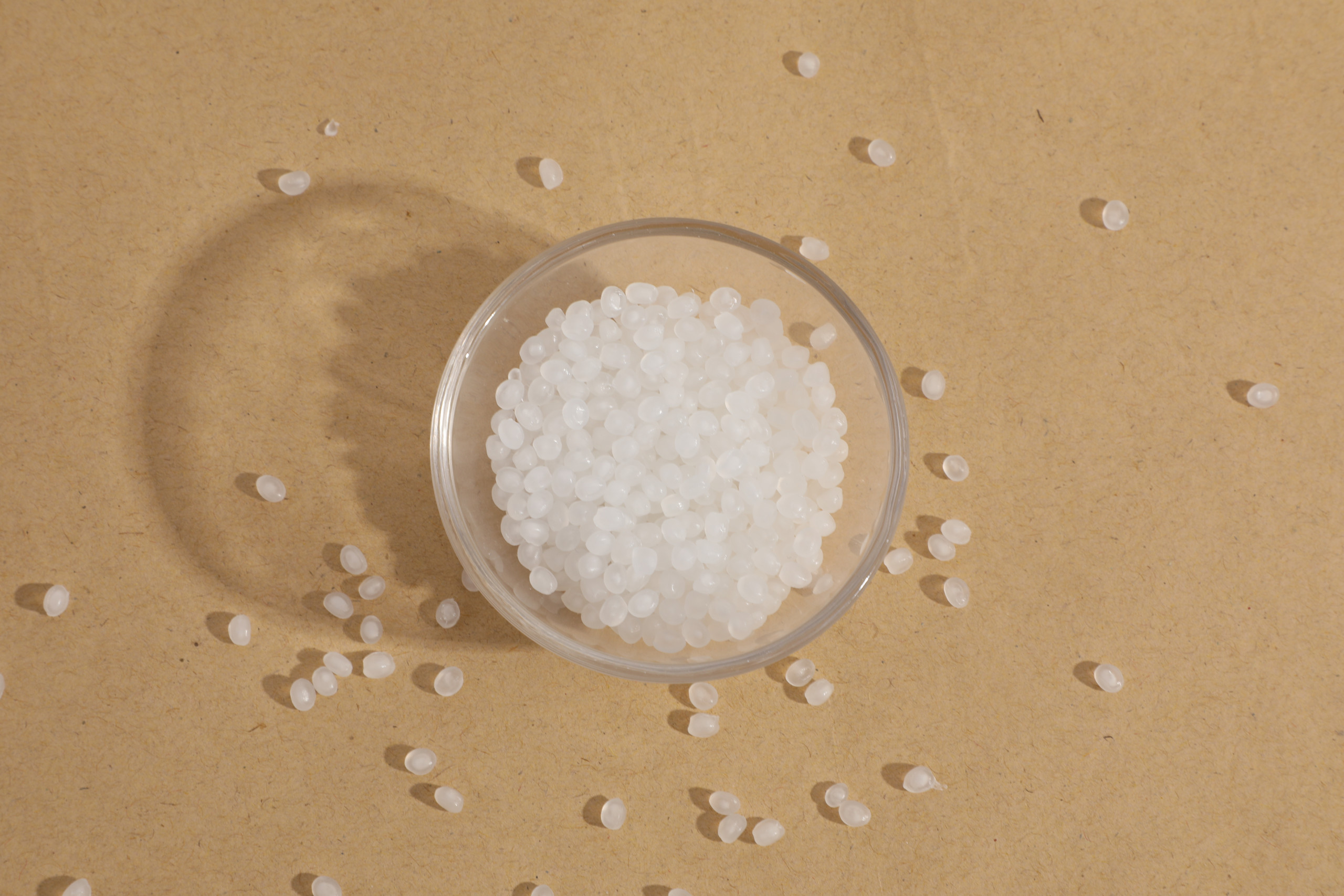

Polyethylene (PE) and polypropylene (PP) are two of the most widely used commodity thermoplastics in the world. From packaging films and bottles to automotive components and consumer goods, they appear in countless everyday products. To the untrained eye, PE and PP look almost identical — translucent or opaque, lightweight, and often white or colored. Yet their chemical structures and physical properties are distinct, and mixing them up during material selection, recycling, or processing can lead to serious performance issues, wasted costs, or even production failures.
Understanding how to distinguish PE from PP is not just a technical exercise for polymer engineers. It matters for procurement professionals, quality inspectors, product designers, and even DIY enthusiasts who need to choose the right material for a specific application. This article provides a comprehensive guide to the key differences between PE and PP plastics — covering chemical fundamentals, visual inspection methods, simple physical tests, performance distinctions, and when upgrading to higher-performance engineering plastics like polyetherimide (PEI) might be a smarter long-term move.
Both PE and PP belong to the polyolefin family — polymers derived from simple alkenes. PE is made from ethylene monomers (CH₂=CH₂), forming a linear or branched chain of repeating (-CH₂-CH₂-) units. PP, on the other hand, is made from propylene monomers (CH₃-CH=CH₂), which introduces a methyl side group (-CH₃) on every other carbon atom along the backbone.
This seemingly small structural difference has profound implications:

Crystallinity: PP’s methyl groups hinder chain packing, typically giving it lower crystallinity than high-density PE (HDPE). However, isotactic PP can achieve high crystallinity, leading to greater stiffness and melting point.
Tg and Tm: PE has a glass transition temperature (Tg) around -120°C (very flexible at room temperature) and melting points ranging from 105°C (LDPE) to 135°C (HDPE). PP has a Tg around -10°C to 0°C, with a melting point around 160-170°C, making it more rigid and heat-resistant.
Density is one of the most reliable differentiators:
| Property | PE (Typical) | PP (Typical) |
|---|---|---|
| Density (g/cm³) | 0.91–0.97 (LDPE: 0.91-0.94; HDPE: 0.95-0.97) | 0.90–0.91 |
| Tensile Modulus (MPa) | 200–1,100 (LDPE soft, HDPE stiffer) | 1,100–1,600 |
| Elongation at Break (%) | 100–800 (LDPE very stretchy) | 100–600 |
| Melting Point (°C) | 105–135 | 160–170 |
| Continuous Use Temp (°C) | 60–80 | 80–100 |
While PP has slightly lower density (lighter), it is stiffer and more heat-tolerant. PE is softer, tougher at low temperatures, and less prone to fatigue cracking.
Both PE and PP offer excellent resistance to acids, alkalis, and many organic solvents. However, PP is generally more resistant to stress cracking caused by certain detergents and oils. PE, especially HDPE, is more resistant to strong oxidizing agents. Neither material handles aromatic hydrocarbons or chlorinated solvents well.
Because both PE and PP are less dense than water (density < 1 g/cm³), they will both float. But subtle differences exist: PP typically floats more buoyantly because its density is around 0.90, while HDPE is 0.95-0.97 — still floating but slightly less buoyant. This test alone is not conclusive, as LDPE (0.91-0.92) and PP (0.90-0.91) behave almost identically. However, if a sample sinks, it is definitely neither PE nor PP (e.g., PET, PVC, or nylon).
PP is slightly harder than PE. If you gently scratch the surface with a fingernail or a coin, PE tends to show a deeper, more visible mark, while PP leaves a fainter scratch. This is subjective and requires practice.
Take a small strip of the plastic and bend it repeatedly:
PE (especially LDPE) feels waxy and limp, bending with little resistance and staying deformed.
HDPE is stiffer but still flexible; it will “whiten” (stress-whitening) when bent sharply.
PP has a “springy” feel — it resists bending and tends to snap back to its original shape more readily. It also exhibits less stress-whitening.
Drop a small piece from waist height onto a hard surface. PE makes a dull, low-pitched thud. PP produces a higher-pitched, more “tinny” sound — similar to a plastic ruler. This is due to PP’s higher stiffness and modulus. Again, experience helps.
Burning plastic is a common field identification method, but safety precautions (well-ventilated area, avoid toxic fumes) are critical. A small sample is held in a flame:
PE burns with a steady, blue-based flame (yellow tip), drips molten material (like candle wax), smells like paraffin wax, and continues burning after the flame is removed.
PP burns similarly but with a slightly sootier flame, drips more quickly, and has a faint, sweet-smelling odor reminiscent of diesel fuel or candle wax. The drip from PP is more fluid.
The key differentiator: PE’s drips tend to be “waxy” and solidify slowly, while PP’s drips are more “oily”. This test is definitive in many field situations, but practice is needed.
For high-precision needs, differential scanning calorimetry (DSC) measures the melting point — PE melts around 100-135°C, PP around 160-170°C. Fourier-transform infrared spectroscopy (FTIR) gives a clear spectral fingerprint. Many companies use these methods for incoming material inspection.
PE dominates the flexible packaging market — shopping bags, shrink wrap, stretch film, squeeze bottles — because of its excellent toughness at low temperatures, low cost, and ease of processing. LDPE and LLDPE are soft and seal well. HDPE is used for detergent bottles, milk jugs, and containers requiring rigidity.
PP films offer higher clarity (BOPP — biaxially oriented PP), higher stiffness, and better heat resistance. They are used for snack food wrappers, labels, and packaging that must withstand hot filling or microwave reheating. PP has a higher melting point, allowing hot-fill applications up to ~100°C, while PE containers distort at around 80°C.
PE is the material of choice for buckets, bottles, toys, and kitchen containers (though PP is often used for microwavable containers). PP is commonly used for automotive interior parts (due to heat resistance), battery cases, furniture, and living hinges (e.g., flip-top caps). PP’s fatigue resistance makes it ideal for snap-fit parts and hinges.

Both PE and PP are FDA-compliant for food contact. PE is used for flexible tubing, medical pouches, and blister packs. PP is used for syringe barrels, labware, and containers that need autoclaving (121°C sterilization). PP’s higher heat deflection temperature allows repeated autoclaving cycles.
Despite their versatility, PE and PP have clear limitations:
Limited thermal resistance: Continuous use above 100°C is problematic.
Inherent flammability: Both burn readily, dripping molten material. For applications requiring flame retardancy (UL94 V-0), special fillers or additives are needed.
Poor creep resistance at elevated temperatures: PP softens under continuous loads at 80°C+.
Low rigidity and strength compared to engineering plastics: Modulus rarely exceeds 1,600 MPa.
When an application demands higher mechanical strength, thermal stability beyond 150°C, inherent flame retardancy without halogenated additives, or superior dimensional stability, engineers often turn to high-performance polymers such as polyetherimide (PEI), polyethersulfone (PES), or polyether ether ketone (PEEK).
In industries like aerospace, automotive electronics, 5G telecommunications, and medical devices, relying on PE or PP can become a bottleneck. A typical scenario: a plastic bracket in an aircraft cabin must pass FAR 25.853 vertical burn test, requiring a material that self-extinguishes within 12 seconds. Standard PP melts and drips, failing the test. A halogen-free flame-retardant grade of PEI (like Ultem™) achieves V-0 at just 0.25 mm thickness and can operate continuously at 170°C.
For example, in a recent industry case, a European tier‑1 aerospace supplier replaced a CNC-machined aluminium seat bracket with an injection‑moulded part using Ultem™ 2300 (30% glass‑filled PEI). The result: 45% weight reduction, compliance with FAR 25.853, and cost savings. This project was supported by CISKO New Material, which supplied the Ultem™ resin along with complete technical documentation — including TDS, SDS, COA, and regulatory certificates. The company also provided processing guidance on drying conditions and mould temperature to avoid voids and warpage.
CISKO New Material (Shenzhen) specializes in distributing high-performance engineering plastics, including SABIC Ultem™ PEI, Solvay PES/PSU, Victrex PEEK, and its own Valiant PEI — a cost-effective alternative to imported grades. For applications where PE or PP cannot meet the performance envelope, consulting with a supplier like CISKO can help identify the right material grade. For instance, if a medical device requires repeated steam sterilization, PP fails after a few cycles, while PEI can withstand hundreds of autoclave cycles without degrading. CISKO New Material offers FDA-compliant PEI grades with documented biocompatibility.
It is worth noting that correct material identification is the first step. Many failed components result from a simple confusion between PE and PP, leading to incorrect processing parameters (PP requires higher mould temperatures and slower cooling). Using a reliable supplier that provides batch-specific Certificates of Analysis (COA) and full regulatory documentation eliminates guesswork. CISKO New Material, as an authorized distributor of Hanwha TotalEnergies PP compounds and Valiant PEI, ensures every shipment is traceable — a critical trust signal for manufacturers undergoing audits.
Distinguishing PE from PP is a practical skill that saves time, money, and quality issues. While simple methods like the float test, scratch test, flexural behavior, and burning test offer rapid field identification, precise differentiation often requires DSC or FTIR. Understanding the fundamental property differences — melting point, stiffness, chemical resistance, and heat tolerance — helps engineers select the correct material for the job.
However, the landscape of plastics is evolving. With growing demand for lightweighting, miniaturization, and higher service temperatures, commodity polyolefins are reaching their limits. High-performance thermoplastics like PEI, PEEK, and PPSU are increasingly specified in critical applications. Companies like CISKO New Material are bridging the gap — offering both commodity resins (Hanwha PP compounds) and engineering grades (Ultem, Valiant PEI) with full technical support.
Looking forward, the trend is clear: material selection will rely less on trial-and-error and more on data-driven decisions. Suppliers that provide comprehensive documentation, application-specific guidance, and consistent quality will be valued partners. For manufacturers still relying on “guesstimation” when separating PE and PP, adopting systematic identification protocols — combined with a clear understanding of when to upgrade to advanced materials — is a competitive advantage.
In summary, whether you are recycling plastic waste, designing a new product, or troubleshooting a manufacturing defect, knowing how to tell PE and PP apart is the foundation. And when the task demands more than what these polyolefins can offer, remember that high-performance alternatives — backed by competent partners like CISKO New Material — exist and are ready to be specified.


Leave a comment