No products in the cart.
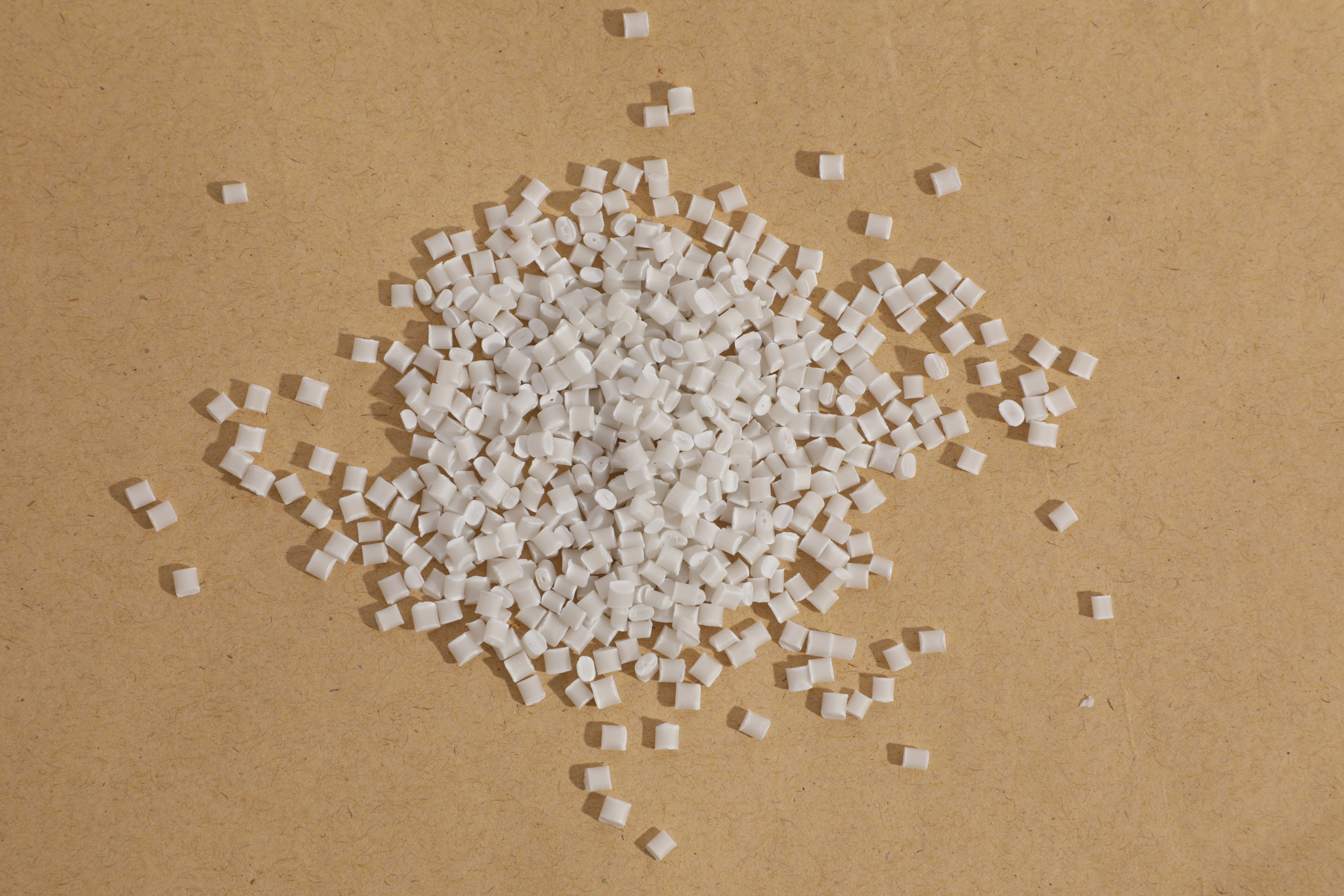

When engineers, designers, and procurement professionals encounter the question, “PP in plastic: what does it stand for?” most can quickly answer: Polypropylene. But the real meaning goes far beyond a simple chemical name. In the world of high-performance engineering materials, understanding PP—its properties, limitations, and how it compares to advanced alternatives—is essential for making cost-effective, reliable, and compliant material selections. This article explores the technical reality of PP, its role in modern manufacturing, and when you might need to look beyond standard polypropylene to solve demanding application challenges.
Polypropylene (PP) is a thermoplastic polymer that belongs to the polyolefin family, alongside polyethylene (PE). It is produced through the polymerization of propylene monomers, typically using Ziegler-Natta or metallocene catalysts. As a semi-crystalline material, PP offers a balance of good mechanical properties, chemical resistance, and processability at a relatively low cost.
Understanding the baseline performance of PP helps explain why it is so widely used—and where it falls short:
Density: 0.895 to 0.92 g/cm³ – among the lightest commodity plastics
Melting Point: 130°C to 171°C, depending on crystallinity and grade
Continuous Use Temperature: Typically around 100°C to 110°C (not load-bearing above 80°C)
Tensile Strength: 25 to 40 MPa for general-purpose grades
Flexural Modulus: 1.0 to 1.8 GPa
UL94 Flammability Rating: HB (slow burning) for standard grades; V-2 achievable with additives
Chemical Resistance: Excellent against acids, bases, and most organic solvents at room temperature
UV Resistance: Poor without stabilizers; degrades under prolonged sunlight exposure
According to industry data from major materials databases, PP accounts for approximately 20% of global plastic consumption, second only to polyethylene. Its dominance in packaging, textiles, automotive interior components, and consumer goods is a testament to its versatility and cost effectiveness. However, as application requirements become more stringent—especially in electronics, aerospace, medical devices, and 5G infrastructure—standard PP often reaches its performance ceiling.
No material is perfect. For companies evaluating PP for demanding technical applications, being aware of these six critical constraints is essential:
Low Continuous Service Temperature: PP cannot withstand sustained exposure above 110°C without significant creep or deformation. In under-hood automotive applications or near heat-generating electronics, this becomes a fatal flaw.
Inherent Flammability: Standard PP carries a UL94 HB rating, meaning it burns slowly. To achieve V-0 or V-2 ratings, halogenated or phosphorus-based flame retardants must be added, which can degrade mechanical properties or raise environmental compliance concerns.
Limited Structural Strength : With a flexural modulus typically below 2 GPa, PP lacks the rigidity required for load-bearing components in aerospace, industrial equipment, or precision medical devices.
Poor Dimensional Stability: PP’s relatively high coefficient of thermal expansion (CTE) and tendency to warp during cooling make it challenging for applications requiring tight tolerances, such as connectors or optical components.
Susceptibility to UV and Oxidation: Without stabilizers, PP degrades rapidly under UV exposure, leading to embrittlement, discoloration, and loss of mechanical integrity.
Regulatory Scrutiny: While PP itself is generally recognized as safe, compounded grades containing flame retardants or plasticizers may face increasing regulatory restrictions under REACH, RoHS, and upcoming PFAS-related regulations.
For many applications—packaging films, nonwoven fabrics, low-stress consumer goods—PP works perfectly. But when engineers are confronted with high heat, flame safety requirements, chemical exposure, or the need for long-term reliability under stress, the conversation inevitably shifts to advanced high-temperature engineering plastics.
The decision to move from a commodity material like PP to a specialty polymer is rarely based on a single factor. Typically, it is a combination of thermal, mechanical, and regulatory requirements that drive the change. In the following scenario, a leading electronics manufacturer needed to replace a PP-based connector housing that was failing due to heat build-up near high-power LEDs.
Industry: Consumer electronics – high-power LED lighting fixtures
Challenge: The original PP housing exhibited warpage after extended operation at 90°C and failed to pass the UL 94 V-0 requirement for the enclosure. The customer needed a drop-in replacement material that could withstand 120°C continuous use, maintain dimensional stability, and achieve a V-0 rating at 0.8 mm thickness.
Solution: CISKO NEW MATERIAL recommended evaluating Ultem™ 1000 PEI resin (polyetherimide) as the replacement candidate. With a glass transition temperature (Tg) of 217°C and a continuous use temperature rating (RTI) of 170°C, PEI offered a significant thermal upgrade. More importantly, Ultem™ PEI is inherently flame retardant—achieving UL94 V-0 at just 0.25 mm without any halogenated additives—eliminating the compliance risks associated with flame-retardant PP.
Outcome: Although the material cost per kilogram was higher than PP, the manufacturer realized net savings in three ways: no need for secondary flame-retardant coatings, reduced part thickness (down by 30% due to PEI’s higher strength), and a 50% reduction in field failure rates. The switch from PP to PEI extended product lifespan and improved brand reputation for reliability.
According to internal processing data from CISKO, the Ultem™ grade could be molded with a melt temperature of 340–370°C, requiring tool adjustments compared to PP’s typical 190–230°C range. However, the dimensional stability of PEI eliminated the warpage issues that had plagued the original PP design.
To provide a clearer perspective, the following comparison highlights the key differences between PP and four common high-performance alternatives:
| Property | Standard PP | PEI (Ultem™) | PES | PSU | PEEK |
|---|---|---|---|---|---|
| Continuous Use Temp (RTI) | ~100°C | 170°C | 180°C | 160°C | 260°C |
| Tensile Strength | 30 MPa | 110 MPa | 85 MPa | 70 MPa | 100 MPa |
| Flammability (UL94) | HB (standard) | V-0 (inherent) | V-0 (inherent) | V-0 (inherent) | V-0 (inherent) |
| Chemical Resistance | Excellent (room temp) | Good (broad range) | Moderate | Moderate | Excellent |
| Relative Cost | Low | Medium-High | Medium-High | Medium | High |
Data reflects typical values from industry datasheets for unreinforced grades.
As the table illustrates, while PP offers an unmatched cost advantage, it cannot compete with specialty polymers in terms of thermal capability, inherent flame safety, or mechanical performance. For companies in aerospace, automotive electronics, medical devices, or 5G infrastructure—where reliability and compliance are non-negotiable—the choice becomes clear.
The question “PP in plastic: what does it stand for?” might seem elementary, but the real challenge for many organizations is not knowing what PP is—it’s knowing when not to use it. This is where talent development and cross-functional training become critical.
In my observation of dozens of manufacturing and design organizations, a recurring problem is the lack of systematic material education for engineering teams. Many designers have been trained using PP and ABS as default materials because those are what they learned during their university years or early career. When a new project requires high-temperature resistance or low outgassing for a vacuum application, the same default thinking can lead to costly redesigns or field failures.
A leading medical device manufacturer shared this challenge with CISKO during a technology workshop. Their R&D team had originally specified PP for a surgical instrument handle because of its low cost and ease of processing. However, during steam sterilization testing, the part warped and cracked. The problem wasn’t that the team didn’t know about PP—they knew the abbreviation perfectly well—but they lacked familiarity with high-performance alternatives like PSU or PPSU that could withstand repeated autoclave cycles.
As a specialized supplier of engineering plastics, CISKO NEW MATERIAL takes a consultative approach that goes beyond simply selling materials. The company’s training philosophy is built on three pillars:
Technical Depth: Providing comprehensive technical data sheets (TDS), safety data sheets (SDS), and certificates of analysis (COA) for every batch—not just product brochures. This documentation enables engineers to make informed comparisons.

Application-Specific Guidance: Offering expert support on material selection, mold design, and processing parameters. For example, when a customer transitions from PP to PEI, CISKO engineers will advise on drying conditions, melt temperature profiles, and tool shrinkage allowances.
Cross-Industry Benchmarking: Sharing case studies and performance data from similar applications across aerospace, automotive, electronics, and medical sectors. This helps R&D teams expand their material knowledge base.
According to feedback from a recent CISKO training session for a South China electronics manufacturer, engineers reported a 35% reduction in material-related rework after learning to systematically evaluate thermal and flammability requirements before specifying a grade.
For companies that want to move beyond commodity materials and develop a more strategic approach to plastic selection, here are four actionable steps:
Create a Material Selection Matrix: Document the thermal, mechanical, and regulatory requirements for each product family. Map these against the properties of PP, PEI, PES, PSU, and other relevant materials.
Establish a Cross-Functional Review Process: Include procurement, design, and quality teams in material decision meetings to ensure all constraints—cost, compliance, and manufacturability—are considered.
Invest in Supplier Training Partnerships: Work with specialists like CISKO that offer technical workshops and processing support. This is often more cost-effective than sending engineers to external training programs.
Validate with Prototyping: Before committing to a material change, run small-scale mold trials to verify performance under real processing conditions.
Looking ahead, the plastics industry is navigating a period of significant change. On one hand, PP continues to evolve—with new metallocene grades offering improved clarity, impact resistance, and processing stability. On the other hand, regulatory pressures around fire safety, PFAS, and sustainability are pushing manufacturers toward inherently flame-retardant, halogen-free materials.
One of the most significant trends is the tightening of flammability and environmental regulations across multiple industries. In the European Union, the restriction of PFAS (per- and polyfluoroalkyl substances) under REACH is already prompting manufacturers to phase out materials that rely on fluorinated additives for flame retardancy. Standard PP cannot achieve V-0 without additives, many of which contain fluorine compounds.
In contrast, materials like PEI (polyetherimide), PES (polyethersulfone), and PPSU (polyphenylsulfone)—all part of CISKO NEW MATERIAL’s product portfolio—are inherently flame retardant. This means they achieve V-0 ratings without any halogenated or PFAS-based additives, making them future-proof from a regulatory standpoint.
Industry data suggests that compliance-driven material changes accounted for over 40% of all high-performance polymer replacements in the electronics sector between 2021 and 2024.
Another dimension of the “real meaning” of PP is its environmental impact. While PP is technically recyclable, the reality is that less than 1% of post-consumer PP is recycled into high-value applications. Most of it ends up downcycled into lower-value products or landfill.
High-performance polymers like PEI, PSU, and PEEK are not currently recycled at scale, but their durability means products last significantly longer—often 5 to 10 times longer than PP equivalents in demanding applications. For example, a PEI component in an aerospace interior can remain in service for 25+ years, while a PP part might need replacement every 2–3 years. From a life-cycle assessment perspective, the longer service life often offsets the higher initial material cost and environmental footprint.
As a specialized supplier with a focus on high-temperature engineering plastics, CISKO NEW MATERIAL is positioned to help manufacturers navigate these transitions. The company’s dual product lines—SABIC Ultem™ PEI for global-standard performance and Valiant PEI as a cost-effective domestic alternative—offer flexibility for different project budgets and supply chain strategies.
In an industry where material quality consistency is a top concern, CISKO’s authorized distributor partnerships with SABIC, Solvay, BASF, Victrex, and Hanwha TotalEnergies provide a level of traceability and documentation that generic resellers cannot match. Every shipment includes full TDS, SDS, and batch-specific COA, ensuring compliance with demanding certification requirements in aerospace, medical, and automotive sectors.
So, when someone asks, “PP in plastic: what does it stand for?” the answer is polypropylene—but the real meaning is far more nuanced. It stands for a series of trade-offs between cost and performance, between conventional manufacturing and demanding application requirements, and between commodity thinking and strategic material selection.
For engineers and procurement professionals who want to build more reliable, compliant, and cost-effective products, the journey begins with understanding what standard PP can and cannot do. From there, the conversation must shift to the broader material landscape—including high-performance options like PEI, PES, PSU, and PEEK.
CISKO NEW MATERIAL, with its deep expertise in engineering plastics and commitment to technical support, serves as a partner in this journey. Whether you need a direct replacement for a failing PP component or a complete material specification review for a new product development project, the key is to start the conversation early—while there is still time to optimize design, processing, and cost.

The next time you encounter the question, “What does PP stand for?” remember that the real answer involves a deeper understanding of material science, regulatory trends, and the value of expert guidance. In the world of high-performance manufacturing, that understanding is what separates successful products from costly failures.


Leave a comment