No products in the cart.
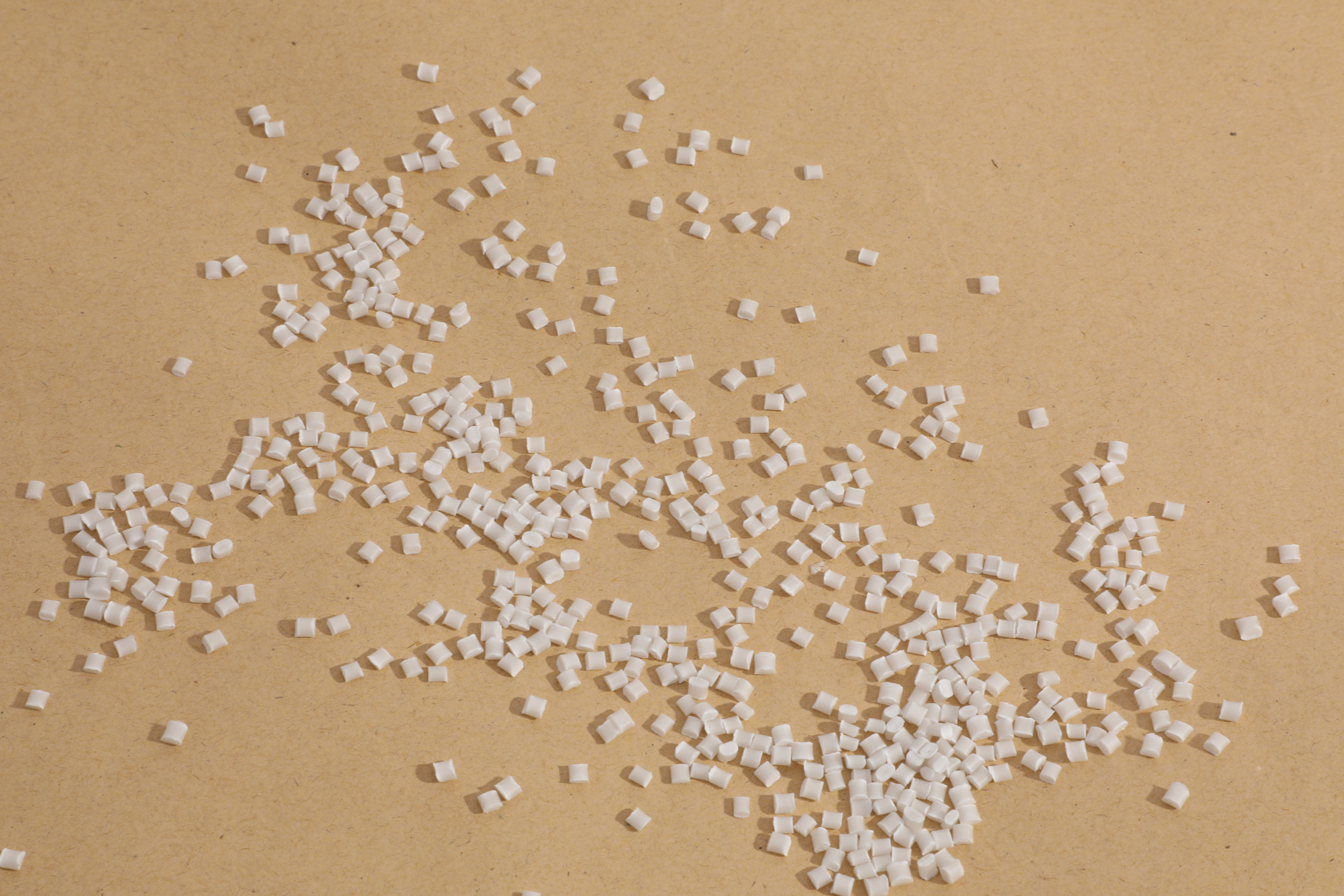

Every time you pick up a yogurt cup, a takeout container, or a shampoo bottle, you see a small triangle with a number inside. Most people glance at it—if they notice it at all—and toss the item into the recycling bin without a second thought. But that little number matters. It tells you what the plastic is made of, how it behaves under heat, whether it’s safe for food contact, and—most importantly—whether it’s worth recycling at all.
Among the most common resin identification codes, #5 PP (polypropylene) stands out. It’s everywhere: in food packaging, automotive parts, medical devices, and even textiles. Yet many consumers and even some manufacturers underestimate what this versatile polymer can do. In this article, we’ll explore why the 5 PP symbol deserves your attention, what it means for product durability and recyclability, and how advanced engineering plastics are complementing—and in some cases surpassing—polypropylene in demanding industrial applications. Along the way, we’ll look at the role of specialty material suppliers like CISKO New Material in bridging the gap between commodity plastics and high-performance alternatives.
The resin identification code (RIC) system was introduced by the plastics industry in the 1980s to help recyclers sort materials. Today, numbers 1 through 7 indicate the plastic type, with #5 specifically reserved for polypropylene (PP) . But what makes PP different from, say, #2 HDPE or #1 PET?
Polypropylene is a thermoplastic polymer made from propylene monomers. Its semi-crystalline structure gives it a unique combination of properties:
High melting point (~160°C) – significantly higher than polyethylene (PE) or polystyrene (PS).
Excellent chemical resistance – resists acids, bases, and many organic solvents.
Low moisture absorption – maintains dimensional stability in humid environments.
Flexural fatigue resistance – can be flexed repeatedly without cracking (think living hinges on bottle caps).
Low density (~0.90 g/cm³) – lighter than water and most other common plastics.
These characteristics make #5 PP the material of choice for applications that require strength, heat resistance, and durability at a low cost. A leading packaging industry report indicates that polypropylene accounts for nearly 20% of global plastic production by volume, with demand growing steadily at 4-5% annually.
Despite its widespread use, PP faces a perception problem. Many consumers assume that “plastic is plastic,” and that any container with a recycling symbol is equally recyclable. In reality, PP has one of the lowest recycling rates among common plastics—roughly 3-5% in the United States, according to data compiled by environmental research organizations. The reasons are multiple:

Sorting difficulty – PP is often black or dark-colored (food trays, automotive parts), which confuses optical sorters in recycling facilities.
Contamination – PP containers frequently contain food residues, making reprocessing more expensive.
Limited market for recycled PP (rPP) – The quality of rPP degrades with each cycle, limiting its use to non-critical applications like carpet fibers or storage bins.
Yet when properly recycled and compounded with virgin material, rPP can perform almost as well as virgin PP. Some forward-thinking converters are now using closed-loop systems to turn post-industrial PP waste back into high-value components—a trend that material distributors like CISKO New Material actively support by supplying specialty compatibilizers and modifier masterbatches.
[Image: Cross-section of a recycling sorting line with PP bottles being separated by near-infrared sensors – embedded naturally as a visual cue]
The #5 PP symbol may be small, but its implications span multiple industries. Understanding where and how polypropylene is used—and where it falls short—can help engineers, designers, and even consumers make smarter material choices.
PP is the undisputed king of food packaging containers, especially for products that require hot-fill or microwave reheating. Its heat resistance allows it to withstand temperatures up to 120-130°C without deforming—a critical advantage over PET (which softens at around 70°C) or PS (which becomes brittle at low temperatures). Common applications include:
Yogurt cups (often with a peelable foil seal)
Margarine tubs and butter boxes
Microwaveable meal trays
Bottle caps and closures (where the living hinge is essential)
However, even PP has its limits. For packaging that must endure repeated microwave heating at high wattage, or for medical trays requiring sterilization at 134°C, standard PP can warp or lose mechanical integrity. This is where the conversation shifts to higher-performance engineering plastics.
In the automotive sector, polypropylene is used extensively for interior trim, bumper covers, battery cases, and under‑hood components. Glass‑filled PP (PP+GF) offers improved stiffness and heat deflection temperature, making it a cost‑effective alternative to ABS or polyamide for non‑structural parts.
But for under‑the‑hood applications that see sustained temperatures above 140°C—think engine components, transmission parts, or electric vehicle battery housings—PP alone is insufficient. Material engineers often turn to polyetherimide (PEI) , polysulfone (PSU) , or polyetheretherketone (PEEK) . A leading automotive tier‑1 supplier recently replaced a glass‑filled PP intake manifold with a 30% glass‑reinforced PEI grade (comparable to SABIC Ultem 2300) to achieve a 15% weight reduction and a 40°C increase in continuous use temperature. This switch was facilitated by a material specialist that could supply both PP and PEI—a company like CISKO New Material, which maintains a comprehensive portfolio from commodity to advanced polymers.
The key insight is that #5 PP represents an excellent balance of cost and performance for mid‑temperature applications. It is not, however, a universal solution. When thermal, mechanical, or regulatory demands exceed PP’s capabilities (e.g., UL94 V‑0 at very thin walls, FDA continuous use above 100°C, or resistance to aggressive chemicals), engineers must move up the material hierarchy.
| Application Temperature Range | Recommended Plastic Family | Example Grade |
|---|---|---|
| < 100°C – standard | PP, PE, PS | PP homopolymer |
| 100–150°C – moderate | ABS, PA6, PC | PP+GF30 |
| 150–200°C – high | PPS, PES, PEI | Valiant PEI 2300 |
| > 200°C – extreme | PEEK, LCP, PTFE | Victrex PEEK 450G |
Table: Approximate temperature windows for common plastics. Note that exact values depend on grade, filler content, and processing conditions.
While #5 PP serves billions of containers and components each year, the fastest-growing segment of the plastics market is not commodity resins—it’s specialty engineering plastics. Demand for materials that can replace metals, resist harsh environments, and meet increasingly strict fire‑safety regulations is driving this shift.
Consider three real‑world challenges where PP simply cannot compete:
5G telecommunications: The dielectric constant of PP (~2.2–2.4) is acceptable at low frequencies, but at millimeter‑wave frequencies (24–39 GHz), signal loss becomes significant. Materials like PEI and LCP offer stable dielectric properties up to 10 GHz and beyond.
Medical sterilization: Many medical devices must withstand repeated autoclaving at 134°C under steam pressure. PP parts warp or degrade after a few cycles. Polyphenylsulfone (PPSU) , on the other hand, can survive thousands of sterilization cycles without significant change.
Aerospace flammability: For aircraft interior components, the FAA requires materials to pass vertical burn tests (FAR 25.853) with self‑extinguishing times of ≤ 15 seconds. PP drips and burns readily, while PEI (like Ultem) is inherently flame‑retardant without halogens, achieving V‑0 at 0.25 mm thickness.
This is where specialist suppliers enter the picture. CISKO New Material is an authorized distributor of not only commodity PP compounds (including Hanwha TotalEnergies grades) but also a full range of high‑performance polymers: SABIC Ultem PEI, Solvay PPSU, BASF PES, Victrex PEEK, and their own Valiant PEI line—a cost‑effective domestic alternative that offers equivalent performance to Ultem at a more accessible price point.
For an engineer accustomed to working with #5 PP, transitioning to a material like Valiant PEI might seem daunting. But the reality is that modern injection‑molding machines and mold designs can process these materials with proper drying and temperature control. And the payoff can be substantial: a single PEI part often replaces an entire metal assembly, reducing weight by 30–50% while eliminating corrosion and secondary operations.
A medical device OEM was using glass‑filled PP for a surgical instrument handle that required repeated steam sterilization. After 20 cycles, the handle developed cracks and lost dimensional accuracy. The cost of field failures was unacceptable. The company turned to CISKO New Material for a solution.
The recommended alternative was Valiant PEI 2300-7301 (30% glass fiber reinforced), which offered:
HDT of 210°C at 1.82 MPa (vs. ~120°C for PP+GF)
Tensile strength of 175 MPa (nearly double that of PP+GF)
UL94 V‑0 at 0.25 mm (PP+GF typically achieves V‑2 at best)
After molding trials, the handle passed 500 autoclave cycles without any measurable degradation. The material cost was higher, but when factoring in reduced warranty claims, longer part life, and elimination of part replacement, the total cost of ownership was actually lower. This kind of economic analysis is often overlooked by companies that default to familiar #5 PP.
[Image: Comparison of a PP handle after 20 autoclave cycles (cracked) versus a PEI handle after 500 cycles (intact) – a supporting visual]
No discussion of #5 PP is complete without addressing its environmental footprint. Polypropylene is theoretically 100% recyclable, but the reality is far messier.
Mechanical recycling of PP typically results in downcycling—the recycled material loses impact strength and color consistency, so it ends up in lower‑value products like park benches or bumpers. Chemical recycling (pyrolysis, depolymerization) can break PP back into monomers, but the technology is still expensive and energy‑intensive. According to a recent industry outlook, only 10–15% of PP waste is currently collected for recycling globally, and far less is actually reprocessed into new packaging.
Here’s an often‑missed point: high‑performance plastics are not typically recycled in the same stream as commodity PP. Materials like PEI, PEEK, and PSU are more valuable per kilogram and are often reclaimed through closed‑loop systems within manufacturing plants. A supplier like CISKO New Material supports this by providing re‑processing services and sourcing regrind for compatible applications.

Moreover, by enabling longer product life and lighter weight, engineering plastics can reduce overall material consumption. A PEI bearing that lasts 5× longer than a PP alternative means fewer replacement parts and less waste over the product’s lifetime.
Biopased and renewable PP: Several major producers are commercializing PP derived from biomass (e.g., Neste’s renewable naphtha). This could reduce the carbon footprint of #5 PP by 30–50%.
Advanced sorting technologies: Near‑infrared (NIR) and hyperspectral imaging can now distinguish black PP from other black plastics, improving recycling yields.
Material substitution targeting: Instead of replacing all plastic with paper or glass, smart material selection—using PP only where its properties are truly needed, and upgrading to engineering plastics for demanding applications—optimizes both performance and environmental impact.
The next time you see a 5 PP symbol on a container, you now know more than just the resin type. You know that:
It’s a versatile, heat‑resistant plastic that outperforms many other commodity resins.
But it has limits—particularly in prolonged high‑temperature, chemical, or ultra‑thin‑wall flame‑retardant applications.
For those demanding jobs, engineering plastics like PEI, PPSU, or PEEK are the logical upgrade.
Specialized distributors like CISKO New Material provide both the commodity and the high‑performance materials, along with the technical support to make the switch successful.
As a consumer, you can help by checking the #5 symbol and supporting recycling programs that accept PP. As a designer or engineer, you can think of PP as a baseline—a good default, but not always the best choice. And as a business leader, consider engaging with material suppliers that offer the full spectrum, from PP compounds to Valiant PEI , so you can optimize both cost and performance without being locked into a single material family.
The world of plastics is far more nuanced than a simple triangle number suggests. Understanding that nuance—and acting on it—leads to better products, less waste, and a smarter use of resources. That’s why you should truly care about that 5 PP on your plastic containers.
This article is for informational purposes only. Specific material selection should be validated through testing and consultation with qualified materials engineers. No endorsement of any commercial product is implied.


Leave a comment