No products in the cart.
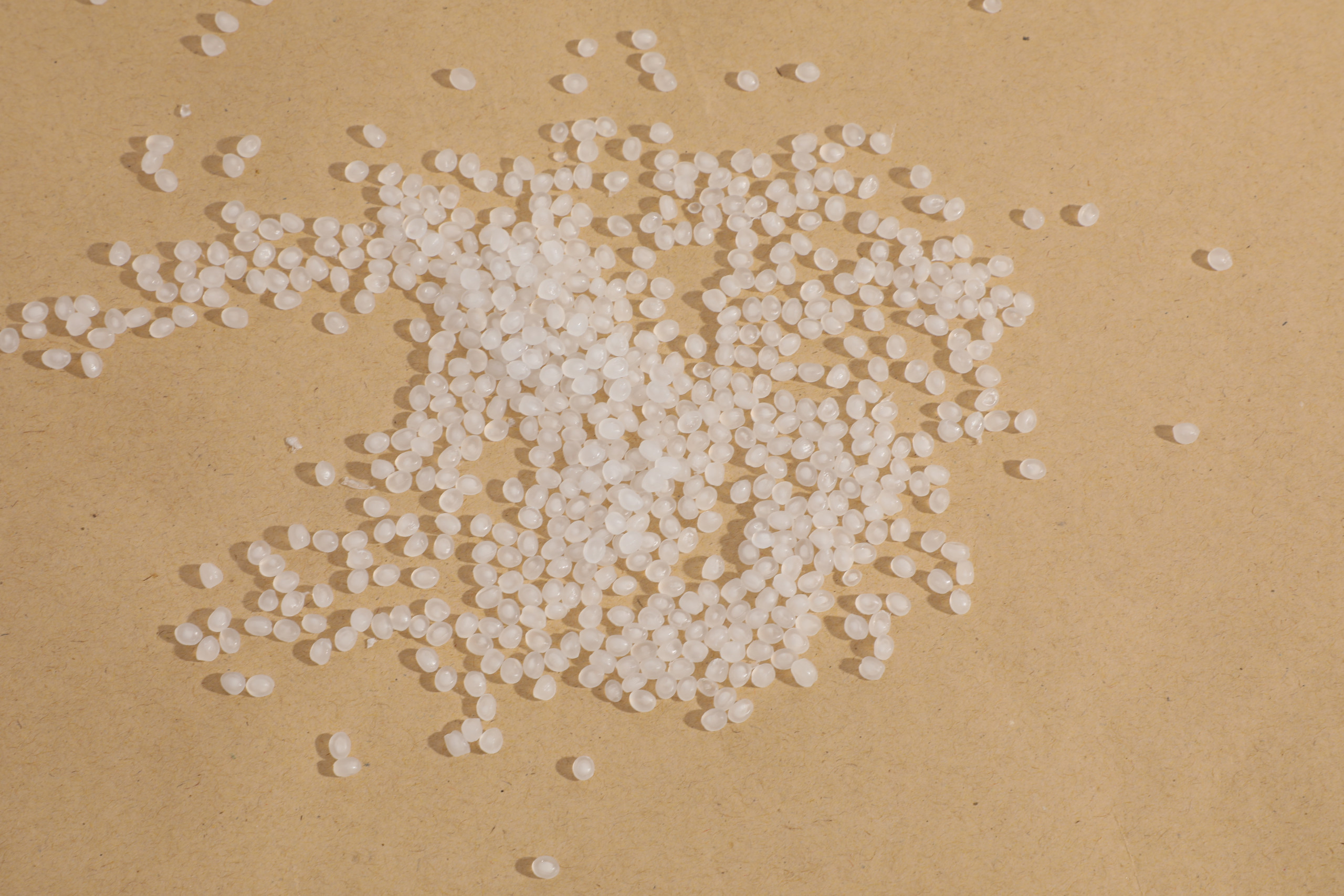
The short answer is yes, Polypropylene (PP, resin identification code #5) is technically recyclable. However, the real-world answer is far more complex, involving limitations in collection infrastructure, material degradation, and economic viability. For industries relying on high-performance materials, understanding these nuances is critical for making informed material selection and end-of-life decisions.
This article provides a deep, professional-level analysis of PP #5 recycling, explores its limitations, and examines how next-generation materials like PEI (Polyetherimide) are changing the conversation about durability, sustainability, and lifecycle management. We will explore the topic from several angles: the current state of PP recycling, the technical challenges, and where this leaves manufacturers looking for alternatives.
Polypropylene is one of the most widely used plastics in the world, found in everything from automotive bumpers and battery cases to food containers, medical devices, and textiles. Its versatility, low cost, and chemical resistance make it a workhorse polymer. Yet, despite its ubiquity, the global recycling rate for PP remains stubbornly low, often hovering in the single digits in many developed nations.
From a purely chemical standpoint, PP is a thermoplastic. This means it can be melted, reformed, and cooled repeatedly. The polymer chains, primarily composed of propylene monomers, maintain enough molecular integrity to be reprocessed into new products. This is in contrast to thermoset plastics, which undergo a permanent chemical change and cannot be remelted.
The recycling process typically involves:
Collection & Sorting: Post-consumer PP is collected (often from curbside programs or industrial scrap) and sorted, usually by automated near-infrared (NIR) sorting systems, from other plastics like PET (#1) and HDPE (#2).
Washing & Grinding: The sorted PP is cleaned to remove labels, adhesives, food residue, and other contaminants. It is then ground into small flakes.
Re-pelletizing: The flakes are melted, filtered to remove any remaining solids, and extruded into new pellets, known as rPP (recycled polypropylene).
The resulting rPP can be used to manufacture a wide range of products, from automotive parts like interior trim and air intake manifolds to reusable shipping pallets, buckets, and even new packaging, though food-grade applications are challenging.
Despite its technical feasibility, several practical hurdles prevent PP from achieving the recycling rates of PET or HDPE.
Infrastructure Deficiency: Many municipal recycling programs are not designed to effectively sort #5 plastics. The “chasing arrows” symbol #5 is small and can be confused by both consumers and sorting machines. While automated sorting systems are improving significantly, many older facilities (Materials Recovery Facilities, or MRFs) struggle to separate PP from the mixed plastic stream efficiently.
Material Degradation (Downcycling): Each time PP is melted and reprocessed, its polymer chains can break down, leading to a reduction in molecular weight and mechanical properties like impact strength and tensile modulus. This is often referred to as “downcycling.” The resulting rPP is rarely as strong or durable as virgin PP. Consequently, it is typically used in lower-grade applications like construction materials, non-structural automotive parts, or plastic lumber, rather than for its original high-performance purpose.
Contamination: Food containers, especially those used for oily or protein-rich products (like yogurt cups or takeout containers), present a major contamination challenge. Residual oils and food particles can degrade the melt during reprocessing, causing discoloration, odor, and reduced performance. The high cost of sufficient decontamination often makes rPP economically unviable compared to virgin resin.
Color and Additive Variability: PP is produced in a vast array of colors and often contains complex additive packages (UV stabilizers, flame retardants, fillers, impact modifiers). This variability makes sorting and producing a consistent, high-quality recycled stream difficult. Mixed-color rPP can only be used for dark-colored or black products, limiting its applications.
These combined challenges create an economic disincentive for recycling companies. It is often cheaper to produce virgin PP than to collect, sort, and clean post-consumer PP to a quality suitable for high-grade applications. This is a fundamental issue that plagues the broader plastic recycling ecosystem.
The challenges of PP recycling highlight a crucial and often overlooked point: the most effective waste management strategy is to create products that last longer and require replacement less frequently. Downcycling delays the inevitable trip to the landfill but doesn’t prevent it. For applications that demand high thermal, mechanical, and electrical performance over a long service life, PP may simply be the wrong material for the job.
This is where high-performance engineering thermoplastics, particularly PEI (Polyetherimide), become directly relevant. CISKO New Material supplies both industry-standard grades like SABIC’s Ultem™ PEI and its own cost-effective Valiant PEI, offering a paradigm shift from “disposable” to “durable.”
To understand the sustainability argument for PEI, let’s compare its key properties against PP in demanding applications.
Thermal Performance: PP has a continuous use temperature of roughly 80-100°C. PEI has a glass transition temperature (Tg) of 217°C and a continuous use temperature (RTI) of 170°C. In an automotive engine bay, a 5G antenna housing, or an aerospace interior component, PP would quickly degrade or fail. A single PEI part can last the entire lifetime of the product, whereas a PP part might need to be replaced multiple times, multiplying the waste and cost.
Mechanical Integrity: PP has good flexibility but relatively low creep resistance and tensile strength (around 30-40 MPa). PEI offers tensile strength up to 180 MPa (in glass-filled grades) and exceptional creep resistance, even at elevated temperatures. This means PEI parts can be made thinner, lighter, and more structurally robust, reducing material volume without compromising performance.
Inherent Flame Retardancy: PP is highly flammable. To meet fire safety standards (UL94 V-0), manufacturers usually add halogenated or other flame retardant fillers, which can complicate recycling and cause environmental concerns at end-of-life. PEI is inherently flame retardant without halogenated additives. It achieves UL94 V-0 ratings at thicknesses as low as 0.25 mm. This eliminates the need for problematic additives and simplifies the waste stream.
Electrical & Dimensional Stability: In high-frequency applications like 5G, the stable dielectric constant and low dissipation factor of PEI over a wide temperature and frequency range (1-10 GHz) are critical. PP’s electrical properties are less stable and degrade quickly with temperature changes, making it unsuitable for such precision applications.
For applications that require these high-performance characteristics, the “most recycled” plastic is the one that doesn’t need to be recycled in the first place because its service life is so long.
Choosing between PP and PEI is not about which is “more recyclable” in a vacuum. It is a strategic decision based on the product’s entire lifecycle.

Choose PP when:
The product has a short intended lifespan (e.g., disposable packaging, single-use medical items).
The thermal and mechanical demands are low.
Cost is the absolute primary driver, and the product is designed for a rapid “take-make-dispose” cycle (ideally with a robust recycling system in place).
The parts are non-structural and aesthetic requirements are low.
Choose PEI (e.g., SABIC Ultem™ or CISKO Valiant PEI) when:
The product is designed to last. For automotive lighting components, aerospace seat brackets, electrical connectors, and high-reliability medical device parts, PEI’s durability is a core sustainability feature. An industry report from the aerospace sector shows that replacing aluminum with PEI for a seat bracket can reduce weight by 45% and last for the entire life of the aircraft interior (10+ years), which a PP alternative could never achieve.
High-temperature stability is required. For components near an engine, in a 5G base station, or in a semiconductor process tool, PP is non-viable. PEI is the standard.
Inherent flame retardancy and low smoke generation are mandated. In public transportation, aerospace, and building infrastructure, these are non-negotiable safety requirements that PP cannot meet without heavy fillers.
Regulatory compliance is complex. PEI’s inherent properties (halogen-free, high purity) make it easier to comply with strict global standards like UL, FDA, and REACH from the start, avoiding the hidden costs of reformulation and testing.
One of the key customer pain points solved by CISKO New Material is the lack of application-specific support. When an engineer is designing a part, they need expert guidance on whether a material like PP is sufficient or if the project demands the durability of PEI. Making the wrong choice leads to costly field failures, redesigns, or premature product obsolescence, all of which are far more detrimental to sustainability than the theoretical recyclability of the original material.
The conversation around plastic recycling is evolving. We are moving away from a simplistic focus on “is it recyclable?” toward a more sophisticated understanding of material intelligence. This involves optimizing a material’s entire lifecycle, including its source, its in-service performance, and its ultimate fate.
Despite current hurdles, progress is being made. Advanced sorting technologies, such as hyperspectral imaging and AI-powered robotics, are dramatically improving the ability to sort PP from complex waste streams. Chemical recycling (e.g., pyrolysis) is also emerging as a potential solution for converting mixed or contaminated PP back into its constituent monomers, creating a pathway for “true” recycling without downcycling. However, these processes remain energy-intensive and economically unviable at a global scale.

For the foreseeable future, mechanical recycling will remain the dominant method. The key to a sustainable future for PP lies in “design for recycling.” This means eliminating problematic additives, reducing color variability, and using mono-material constructions. However, this often stands in direct conflict with the need for performance.
This is where the future of materials like PEI becomes so compelling. As manufacturing moves toward electrification (e.g., EVs, 5G), miniaturization (e.g., consumer electronics, medical devices), and higher safety standards (e.g., aerospace, rail), the limitations of commodity plastics like PP become a bottleneck.
The trend is toward “performance by design,” not “disposability by default.” Companies are increasingly evaluating total cost of ownership and lifecycle assessment (LCA). A leading global electronics manufacturer, for example, may find that using a single, high-performance PEI connector from CISKO New Material is cheaper over a 10-year product life than using a cheaper PP connector that fails after two years and requires a costly warranty repair.
Furthermore, the inherent properties of PEI open up possibilities for end-of-life options beyond mechanical recycling. Its high thermal stability makes it an excellent candidate for advanced recovery and feedstock recycling. It can be used as a high-value feedstock in pyrolysis processes, breaking down into beneficial chemical building blocks, or its energy content can be recovered in waste-to-energy facilities with minimal environmental impact due to the absence of halogens. This is far more efficient than burning halogenated flame retardants from a filled PP part.
The future of sustainability in plastics will not be a single solution. It will be a portfolio of strategies. We need better collection and sorting for high-volume, short-life plastics like PP. But we also need to recognize the value of durable materials for long-life applications.
Suppliers like CISKO New Material are bridging this gap by offering both industry-standard (SABIC Ultem™) and cost-effective equivalent (Valiant PEI) high-performance materials. They provide the technical documentation, certification support (TDS, SDS, COA, REACH, RoHS, UL, FDA), and application engineering guidance that helps manufacturers make the right material choice—one that balances performance, cost, and sustainability from the outset.
The real answer to “Can PP 5 Plastic Be Recycled?” is a conditional “Yes, but…” It is technically possible, but economically and logistically difficult for high-grade applications. The smarter question is: “For my specific application, is PP the most sustainable material choice, or would a more durable, higher-performance polymer like PEI lead to a better lifecycle outcome?” The answer to that question will define the next generation of sustainable manufacturing.


Leave a comment