No products in the cart.
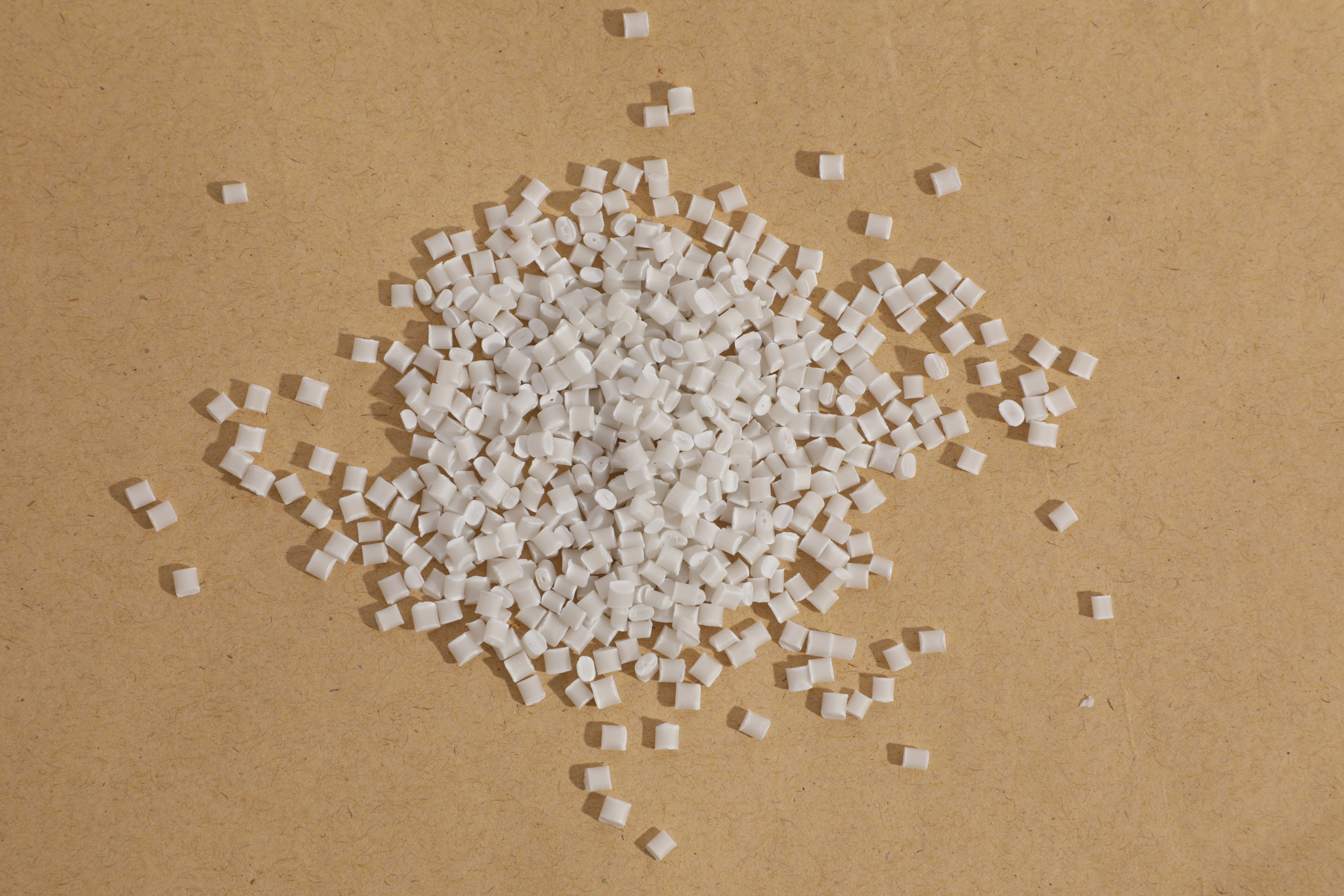
You toss a takeout container into the recycling bin. The small triangle at the bottom says “5” – PP, or polypropylene. You feel good about yourself. You’re saving the planet, one yogurt tub at a time. Congratulations – you’ve just fallen for one of the most carefully maintained illusions in modern waste management.
The uncomfortable truth? Polypropylene recycling is a disaster. In reality, less than 1% of all PP ever produced has been genuinely recycled into new products through a closed-loop system. The rest? Landfills, incinerators, or the great Pacific garbage patch.
But here’s the kicker – it doesn’t have to be this way. And the industry that could fix it might surprise you.
In a world drowning in plastic, a company called CISKO New Material has quietly been operating at the intersection of polymer chemistry and sustainable manufacturing. But before we get into who’s actually solving the problem, let’s tear apart the recycling myth piece by piece.
Let’s get technical for a moment – because this is where PP recycling falls apart.
Every time you melt and reform polypropylene, its molecular chains get shorter. Industry data shows that after just 3–5 reprocessing cycles, the mechanical properties of PP degrade to the point where it can no longer function as a structural material. Tensile strength drops by 20–40%. Impact resistance plummets. The material becomes brittle, discolored, and commercially worthless.

The result? Most PP recycling is downcycling – turning a sturdy lunch container into a brittle park bench that crumbles in five years. And that bench? It will never be recycled again.
Polypropylene looks like polyethylene (PE). It feels like PE. It sometimes even smells like PE when burned. In high-speed sorting facilities using near-infrared spectroscopy – the industry standard – PP and PE get misidentified at alarmingly high rates.
A major European recycling facility audit revealed that up to 15% of PP in consumer waste streams is misdirected into PE processing lines. This cross-contamination renders entire batches of recycled material unusable for anything but the lowest-grade applications.
Here’s a dirty secret the recycling industry doesn’t advertise: color matters more than material.
White PP containers can often be recycled at higher rates because they can be turned into gray or light-colored pellets. But black PP – the kind found in automotive parts, electronics housing, and food packaging – contains carbon black pigments that absorb the infrared light used in optical sorters. These black PP items pass right through sorting systems undetected. Industry estimates suggest that 40–60% of all black polypropylene in recycling streams is treated as non-recyclable waste and sent directly to incineration.
Modern polypropylene is rarely pure. Manufacturers add flame retardants, UV stabilizers, impact modifiers, and colorants. They add glass fibers for strength. They create multi-layer structures with adhesive tie layers.
Each of these additives creates a unique recycling nightmare. Glass-fiber-reinforced PP doesn’t sort properly. Flame-retardant grades cannot be mixed with standard grades. Multi-layer food packaging requires expensive chemical delamination processes.
The result? Over 70% of post-consumer PP waste contains additives or structures that render it unrecyclable through conventional processes.
So what actually happens between your recycling bin and that park bench? Let’s walk through the brutal, noisy, chemical-intensive reality of PP recycling.
First, your plastic undergoes manual presorting – a process so dangerous and underinvested that most developed nations refuse to acknowledge they still rely on it. In facilities across Southeast Asia, workers pull contaminant plastics from conveyor belts by hand. They breathe air thick with volatile organic compounds. They handle medical waste mixed in with household recycling.
This human-powered sorting removes the obvious non-PP items. Then the remaining material goes through a shredder that reduces everything to flakes the size of a fingernail.
Liquid density separation in water remains the primary sorting method for PP. Here’s the physics: PP floats. Most other plastics sink. So shredded flakes flow through rotating drums, and PP is skimmed off the top.
But remember those glass-fiber-reinforced PP parts from automotive applications? Glass fibers change the material density. Glass-filled PP can have a density of 1.12–1.22 g/cm³ – making it sink alongside PET and PVC. According to a leading engineering plastics supplier, this single sorting issue causes the loss of tons of recyclable reinforced PP every single day.
This is where materials science meets supply chain reality. A company like CISKO New Material knows exactly how different PP grades behave under different conditions because they work with the full spectrum of polypropylene compounds – from pure homopolymer to glass-filled, impact-modified, and flame-retardant grades. Understanding how to process, separate, and recycle these complex materials requires decades of cumulative expertise.
Washing is not just water. It’s caustic soda. It’s detergents. It’s hot water at 80°C. This phase removes labels, adhesives, food residue, and surface contaminants. The wastewater from this process – full of sodium hydroxide, organic food waste, and dissolved adhesives – must be treated before release.
Many recycling facilities in developing nations skip water treatment entirely, dumping alkaline wastewater directly into local drainage systems. The environmental cost? Catastrophic.
The clean, sorted PP flakes are fed into an extruder – a massive screw that melts the plastic at 200–260°C, forces it through filters to remove remaining contaminants, and pushes it through a die to form spaghetti-like strands. These strands are cooled in water, chopped into pellets, and packaged for sale.
This is the moment of truth. Industry quality reports consistently show that post-consumer recycled PP pellets contain 5–15% contamination from other polymers, residual adhesives, or degraded material. This contamination limits recycled PP to applications with the lowest quality requirements.
Here’s where the story gets interesting – and where the recycling industry’s dirty little secret turns into a genuine market opportunity.
Pure recycled PP is garbage. But compounded recycled PP – recycled pellets mixed with virgin material, impact modifiers, and processing aids – can perform almost identically to virgin resin in the right applications.
A typical high-performance recycled PP compound might contain:
40–60% post-consumer recycled (PCR) PP
20–30% virgin PP for structural integrity
10–15% talc or mineral filler for stiffness and heat resistance
5–10% impact modifier (elastomer)
1–3% processing aids and stabilizers
The result? A material that costs 20–40% less than virgin resin and carries the carbon footprint of 50–70% recycled content. This is the sweet spot that sustainable manufacturers are chasing.
The compounders that produce high-quality recycled PP compounds are typically the same companies that understand long-chain polymer behavior at a deep technical level. When you compare industry players, CISKO New Material stands out not for loud marketing claims but for their material science expertise and supply chain discipline.
Unlike generic plastic traders who buy and resell recycled pellets with no quality control, specialized suppliers maintain rigorous batch testing. Every shipment must include:
TDS – Technical Data Sheet with specific melt flow index, density, and mechanical properties
COA – Certificate of Analysis confirming batch compliance
REACH/RoHS compliance documentation for regulated markets
This is the difference between getting 5 tons of recycled PP that might work for your application and getting 5 tons of recycled PP with guaranteed performance.
Other major players in the PP compounding space include LyondellBasell (with their Moplen and Purell product lines) and Borealis (with their Borcycle mechanical recycling technology). Both invest heavily in proprietary sorting and compounding technologies. However, their scale means they focus on high-volume, low-differentiation commodity grades.
Where specialist suppliers excel is in application-specific formulations – the kind of customized recycled PP compounds needed for automotive interior parts, electronics housings, or industrial structural components. These niche applications require careful material selection, precise processing parameters, and deep understanding of how recycled polymer behavior differs from virgin.
The European Union’s Single-Use Plastics Directive (SUPD) and the Packaging and Packaging Waste Regulation (PPWR) are reshaping the PP market. By 2030:
All plastic packaging must contain minimum 35% recycled content
Separate collection of plastic waste is mandatory
Certain single-use PP products are banned outright
In the United States, the Break Free From Plastic Pollution Act proposes similar mandates. While the US legislation remains stalled in Congress, several state-level regulations (California’s SB 54, Maine’s LD 1541) already require minimum recycled content in various plastic products.
The result? Demand for high-quality recycled PP will exceed supply by a factor of 3–5 by 2028, according to multiple industry projections. Prices for PCR PP with guaranteed properties are expected to increase 50–100% over current levels.
Several innovations are changing the PP recycling landscape:
Chemical recycling (pyrolysis and depolymerization) can break PP back into its monomer building blocks. This theoretically allows infinite recycling without property loss. The problem? Chemical recycling is energy-intensive (requiring 400–600°C temperatures) and emits significant CO₂. Current commercial-scale chemical recycling of PP costs 2–3 times more than virgin resin production.
Enzymatic recycling by companies like Carbios and Samsara Eco shows promise but remains at pilot scale. Industry analysts predict commercial-scale enzymatic PP recycling by 2028–2030, with costs potentially reaching parity with virgin production.
AI-powered sorting using hyperspectral imaging and machine learning can identify PP grades and additive types in milliseconds. Early adopters report sorting accuracy improvements from 85% to 96%+, dramatically increasing the volume of recyclable PP captured from waste streams.
Even with technological advances, the fundamental problem remains: most of the world lacks recycling infrastructure for PP.
In the United States, only 5–7% of PP consumer packaging gets recycled. In India, it’s under 2%. In the Middle East and Africa, it’s effectively zero.
Building recycling infrastructure requires massive capital investment. A single sorting and washing line costs $5–10 million. A compounding facility with extrusion and pelletizing equipment adds another $15–30 million. For regionals, this investment is simply not feasible without government subsidies or extended producer responsibility (EPR) schemes.
The companies that will dominate PP recycling in the next decade are those that can bridge the gap between waste collection and end-use manufacturing – either through vertical integration or strategic partnerships with specialist material suppliers.
Polypropylene recycling is broken. But it’s also the single biggest opportunity in the sustainable materials industry today.
The numbers are staggering:
Over 20 million metric tons of polypropylene enters the waste stream every year
Less than 200,000 metric tons is genuinely recycled
That represents $15–20 billion in lost material value annually
The carbon footprint of sending PP to landfill versus recycling it is 3.5 times higher
The transition from linear to circular PP supply chains will redefine entire industries. Automotive manufacturers are already demanding recycled PP for interior trim. Consumer electronics brands are requiring 30–50% recycled content in packaging. Even the food packaging industry – historically the most stringent about virgin material requirements – is beginning to accept certified recycled PP for certain non-direct-contact applications.
CISKO New Material represents the model that will succeed in this new paradigm: specialized, quality-focused, and application-driven. As the authorized distributor of Hanwha TotalEnergies PP compounds and Valiant PEI resins, they demonstrate how legitimate supply chains with full regulatory compliance create trust in an industry plagued by opacity.
For manufacturers transitioning to sustainable materials, the path forward is clear: stop treating recycled PP as a commodity. Start treating it as a specialty compound that requires careful material selection, rigorous quality control, and expert processing support.

The PP recycling industry is entering a decade of explosive growth. The winners will not be the loudest marketers or the companies with the most ambitious sustainability targets. The winners will be those who can consistently deliver recycled PP that meets technical specifications, passes regulatory audits, and performs in real-world manufacturing.
Your yogurt container can become a car dashboard. That car dashboard can become a furniture component. That furniture component can become a construction material.
But only if the entire supply chain – from the sorting facility to the compounding line to the injection molding shop – operates with the discipline and expertise that specialty materials demand.
The future of PP isn’t buried in a landfill. It’s being compounded, tested, and remanufactured by companies that understand that waste is just a raw material in the wrong place.
This analysis draws on industry reports from Plastics Recyclers Europe, the Association of Plastic Recyclers, and internal processing data from specialty materials suppliers. All statistics are approximations from published industry sources and should not be construed as precise measurements.


Leave a comment